Open House
Chicago
200 off-limits buildings. 2 epic days.
One all-AI-built experience.
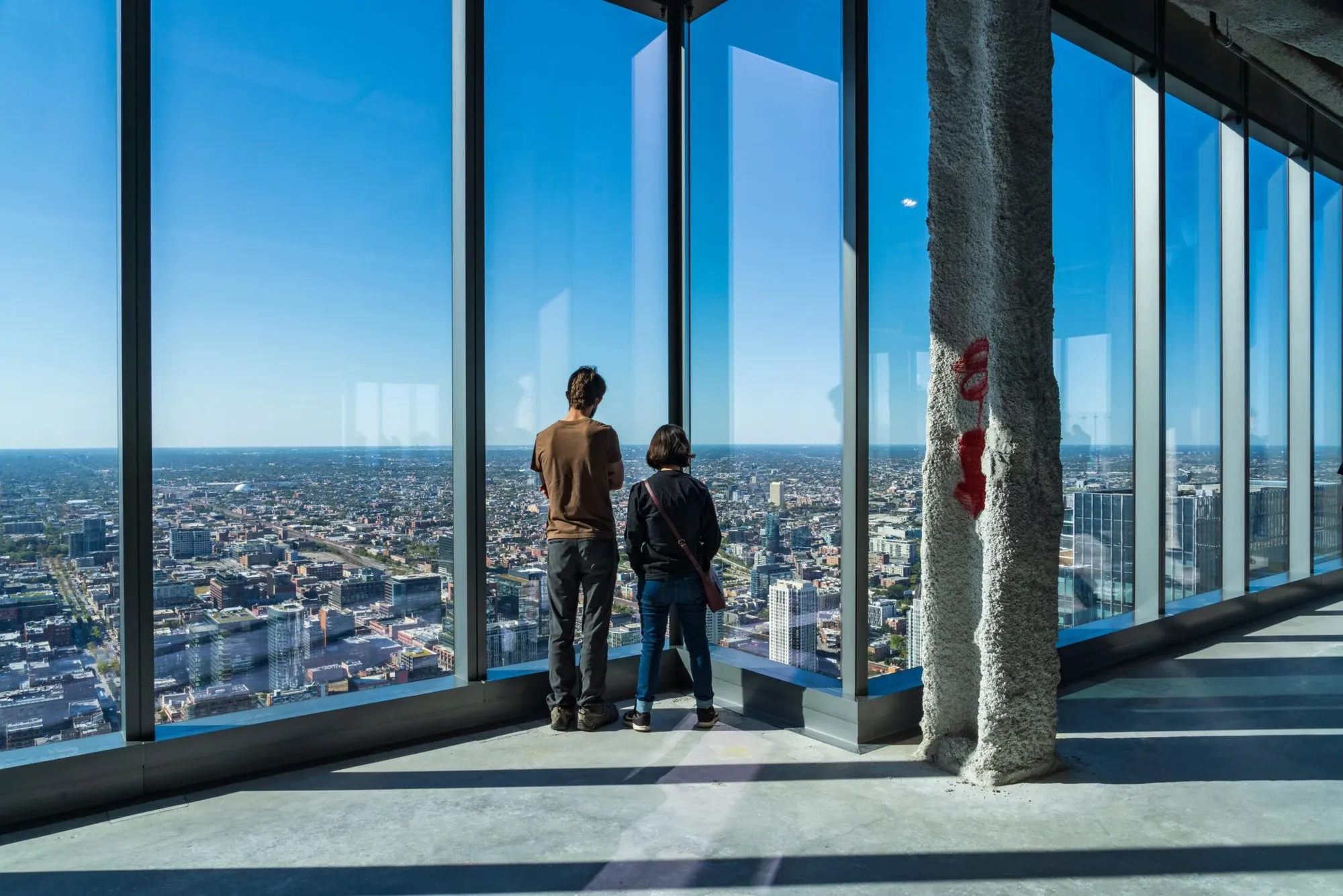
Every October, the Chicago Architecture Center coordinates the behind-the-scenes access of 200-plus buildings people usually only walk past, from the Loop to the far South and West Sides. More than 49,000 people come through. This is their Super Bowl.
- Client
- Chicago Architecture Center
- Role
- Creator / Maker
- Built with
- Claude Code | Figma
- Attendance
- 49,000+
I built a companion app. A guide. A way to maximize OHC participation while demonstrating the power of what building with AI can do. Every pixel and interaction was created by perfect union of Claude Code & Figma.
So much city. So little time.
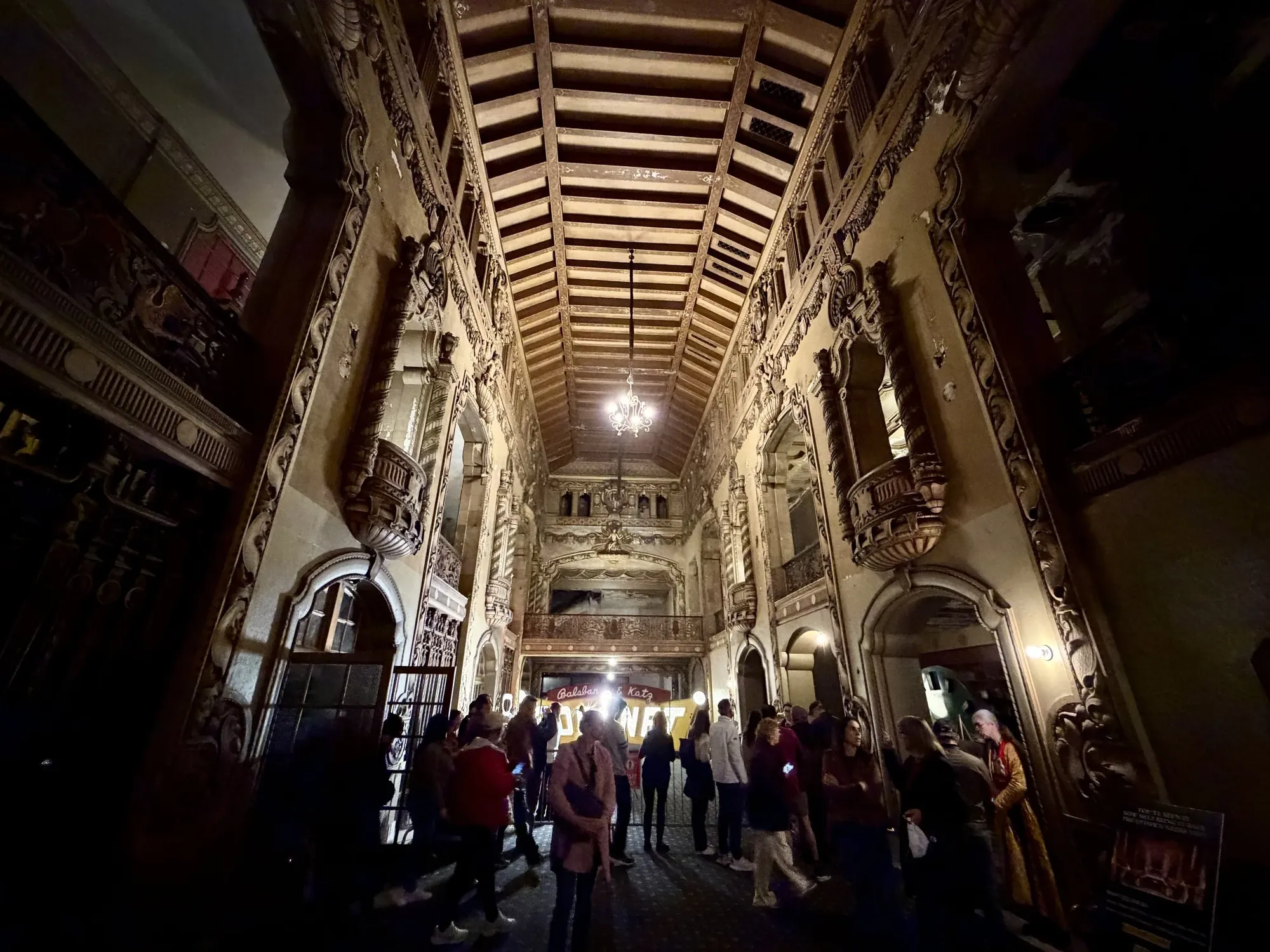
Nobody sees 200 buildings in two days, and a typical directory treats a 1920s bowling alley the same as the Cadillac Palace Theatre. The job is helping one person make a good call about their own weekend.
A guided experience
The app borrows from map experiences people already use daily: Apple Maps, Google Maps, Yelp, etc.
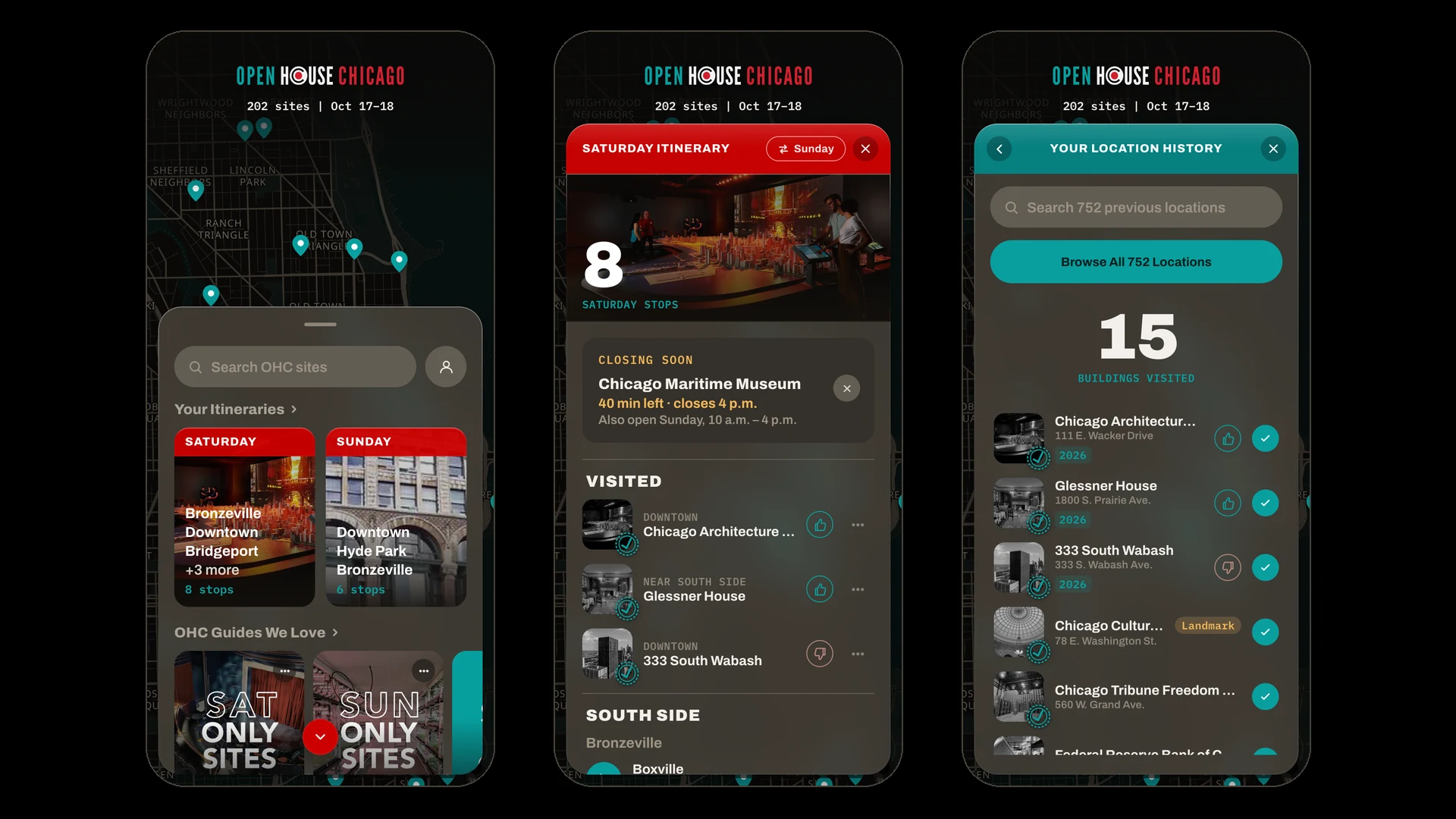
OHC Guides bundle CAC's own lists, like New Sites for 2026 and Saturday Only, and adds a whole one to your plan in a tap.
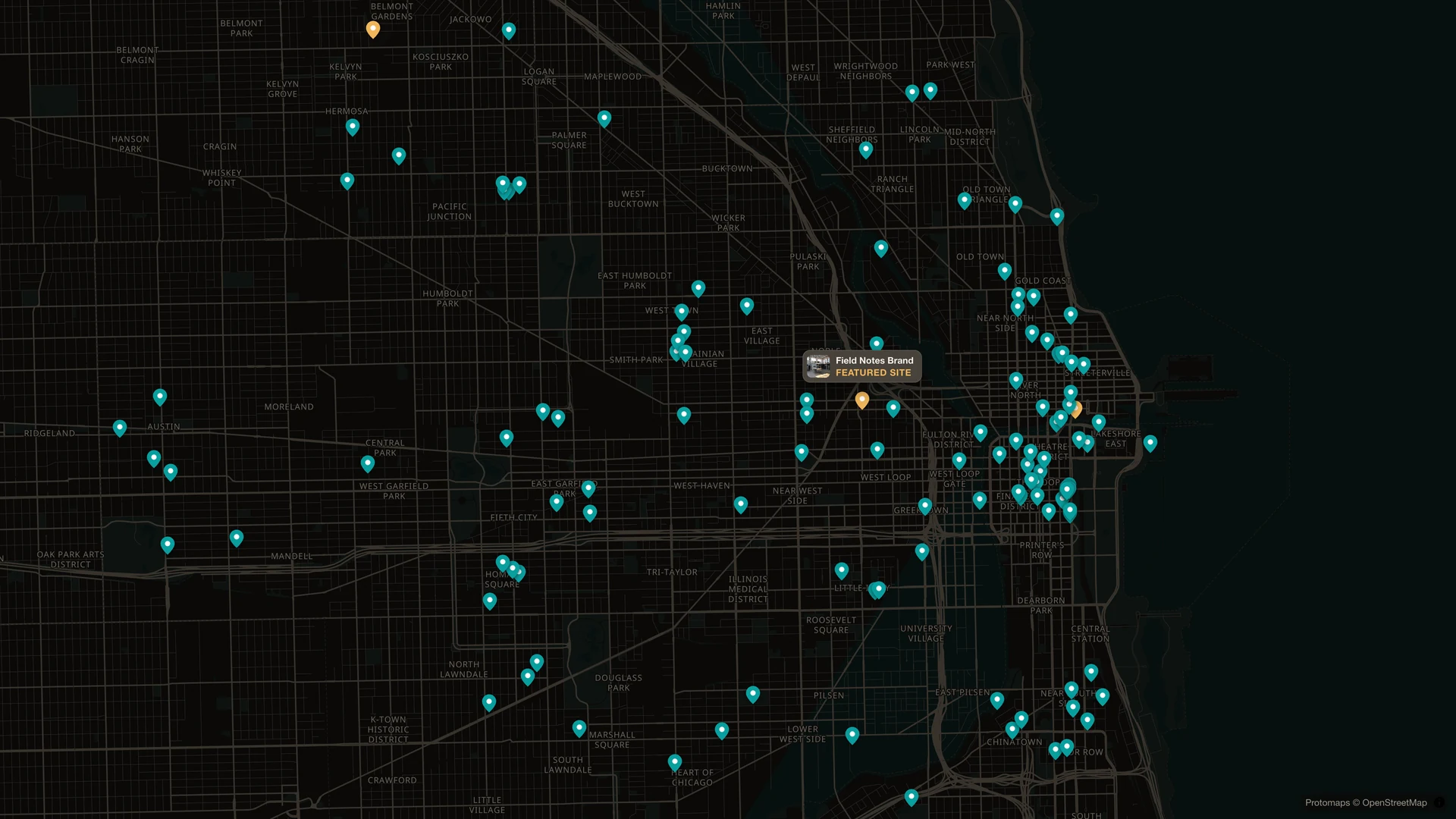
OHC Neighborhoods carves the city into 28 areas on CAC's own map.
Featured Sites puts the standouts up front, each opening onto hours, architect, photos and CAC's write-up.
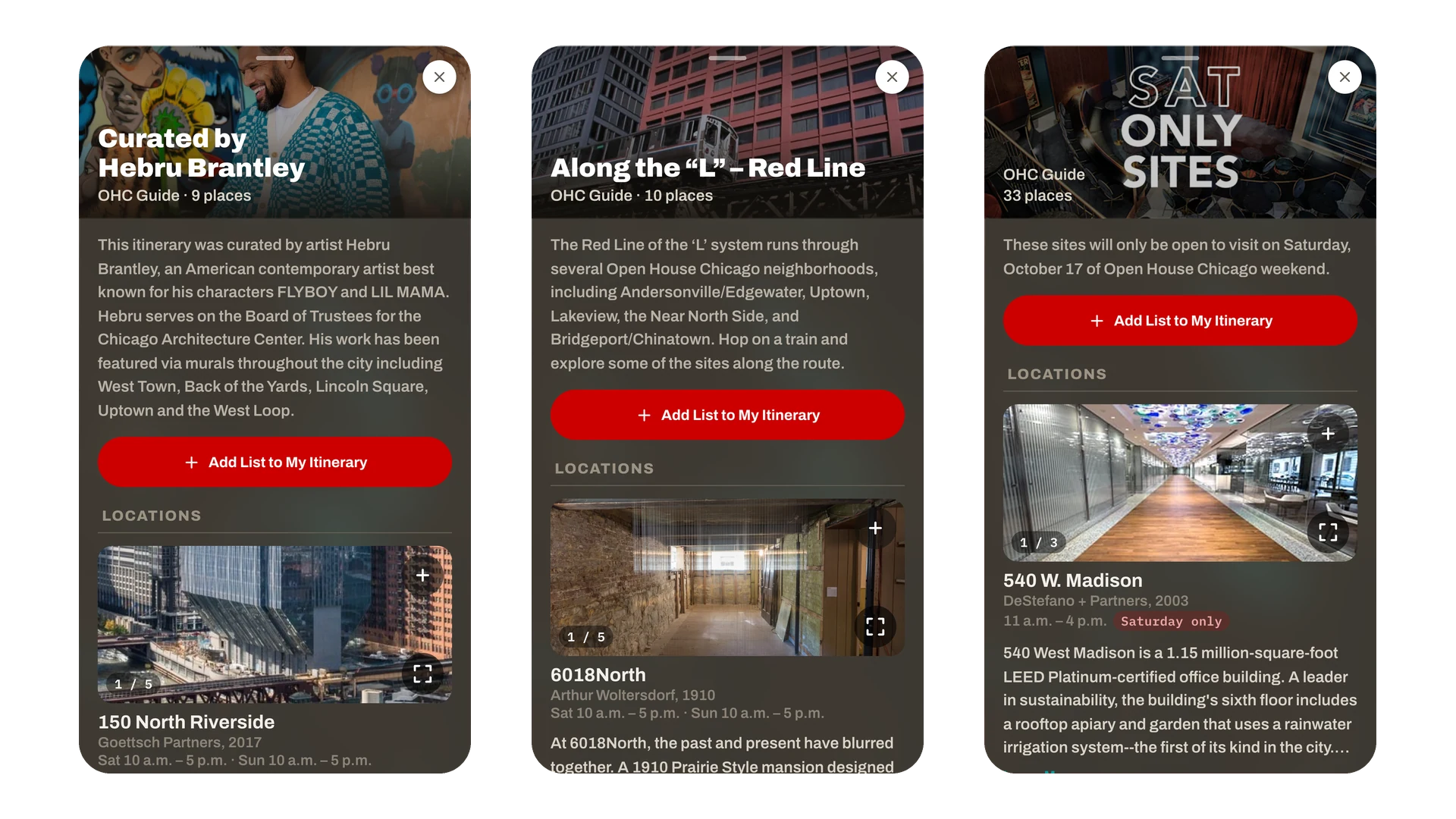
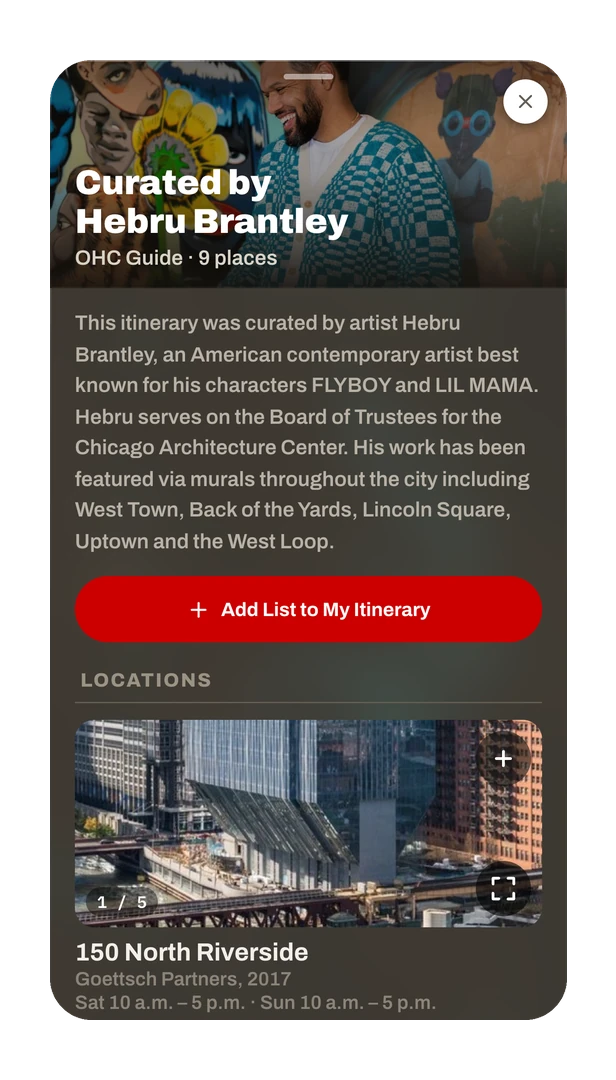
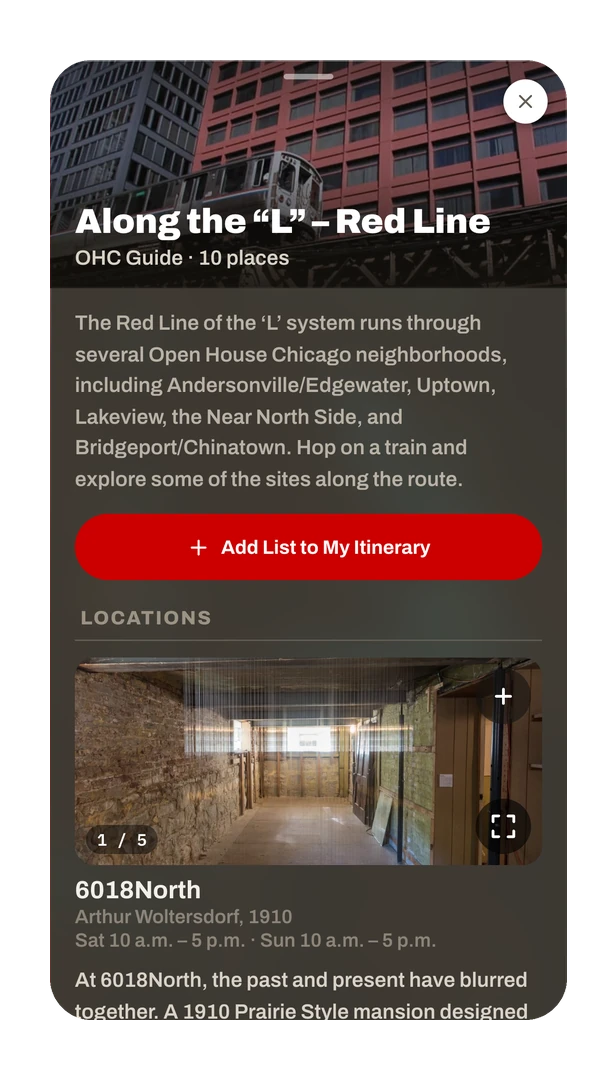
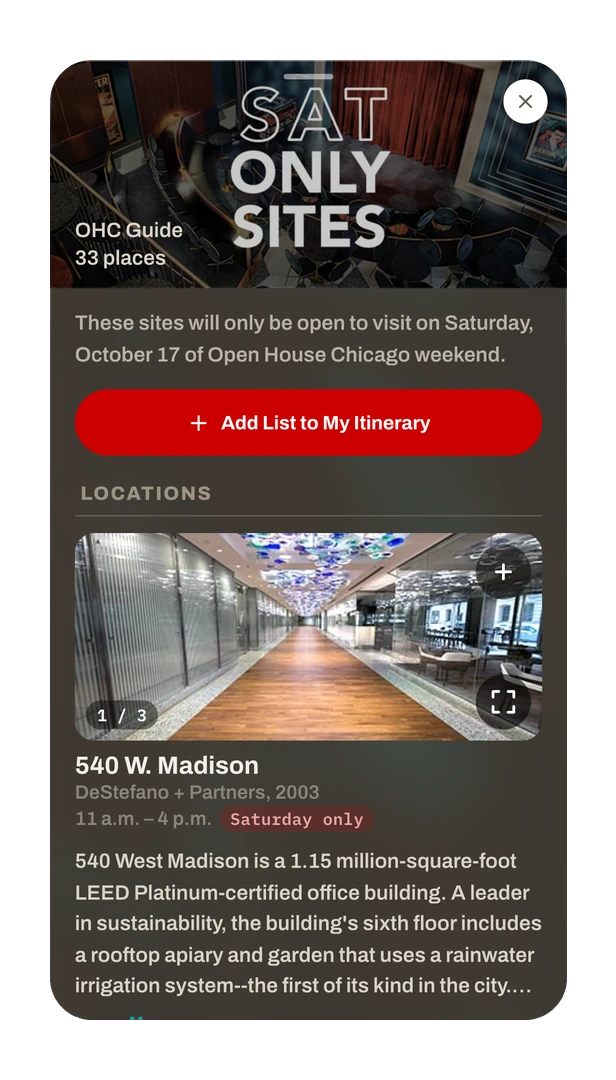
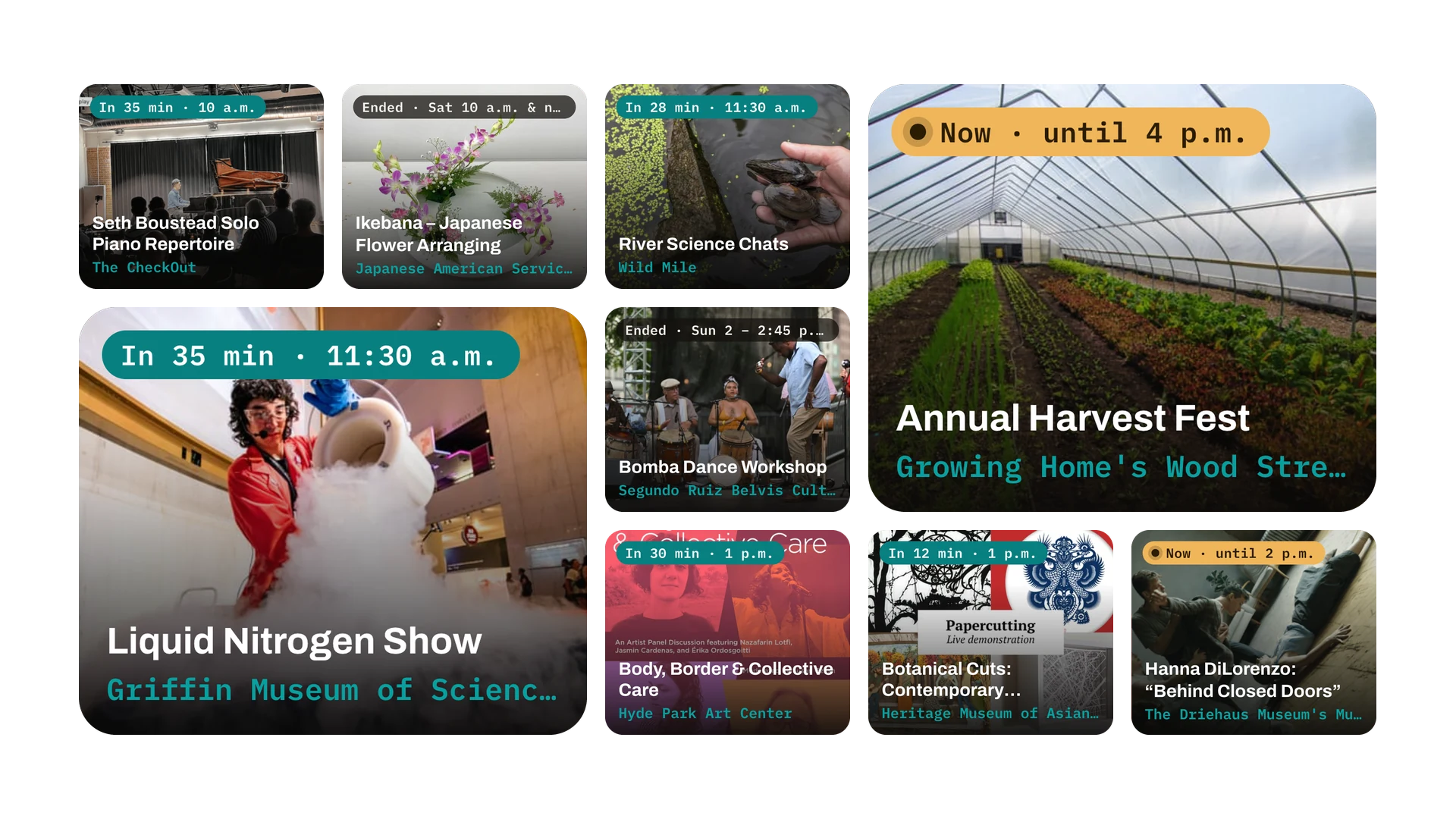
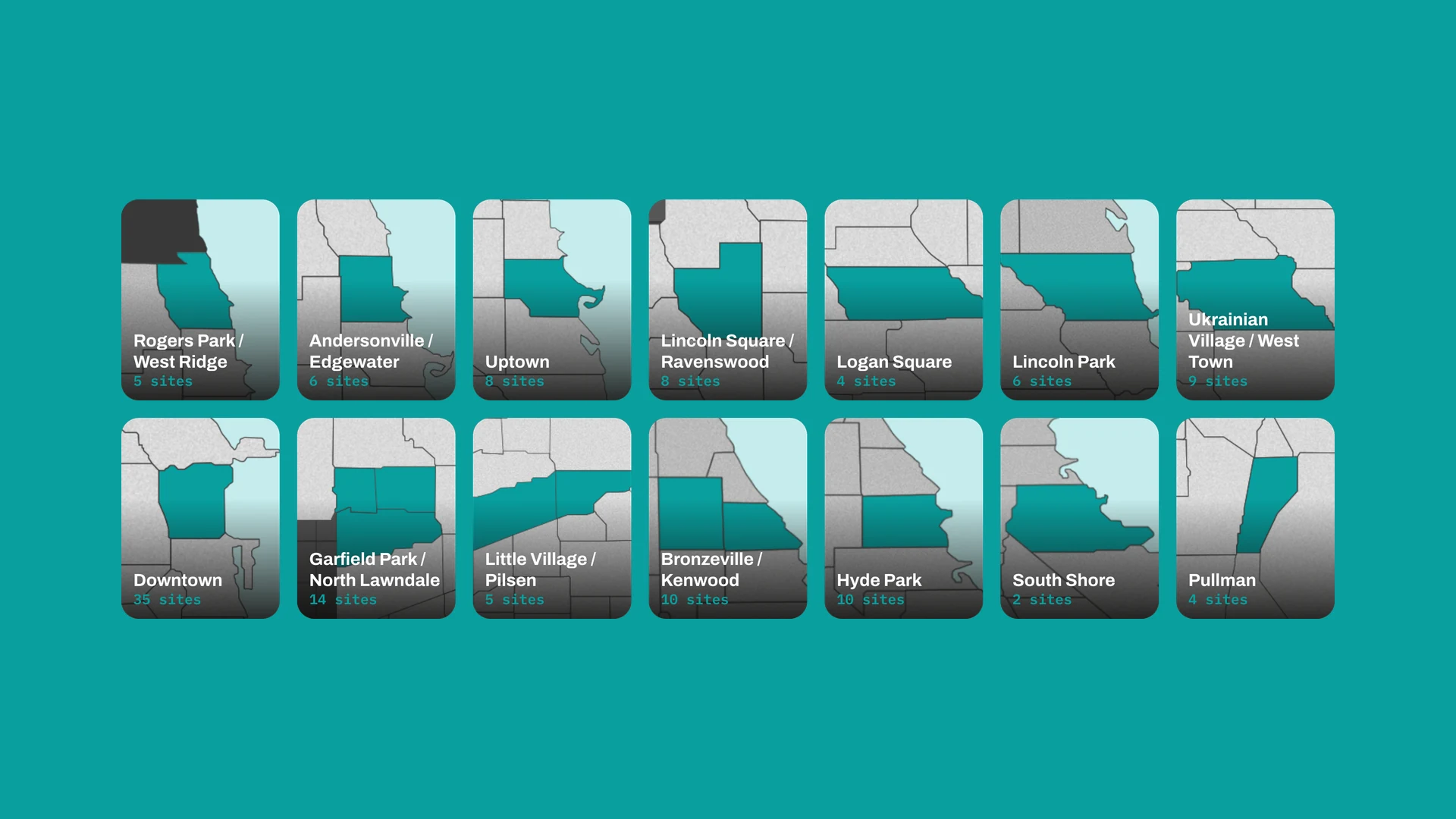
Two Days, One Plan
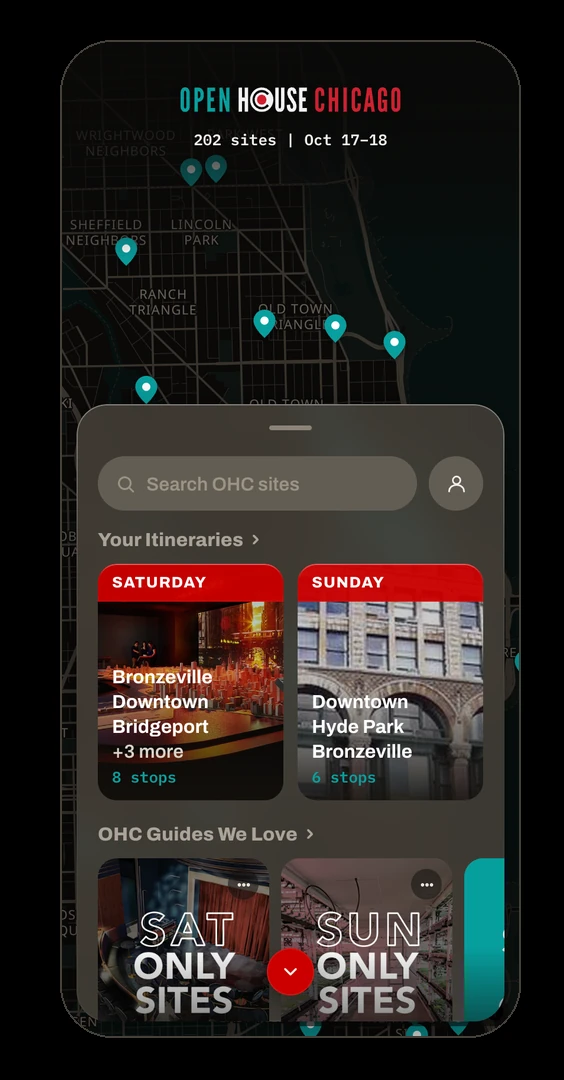
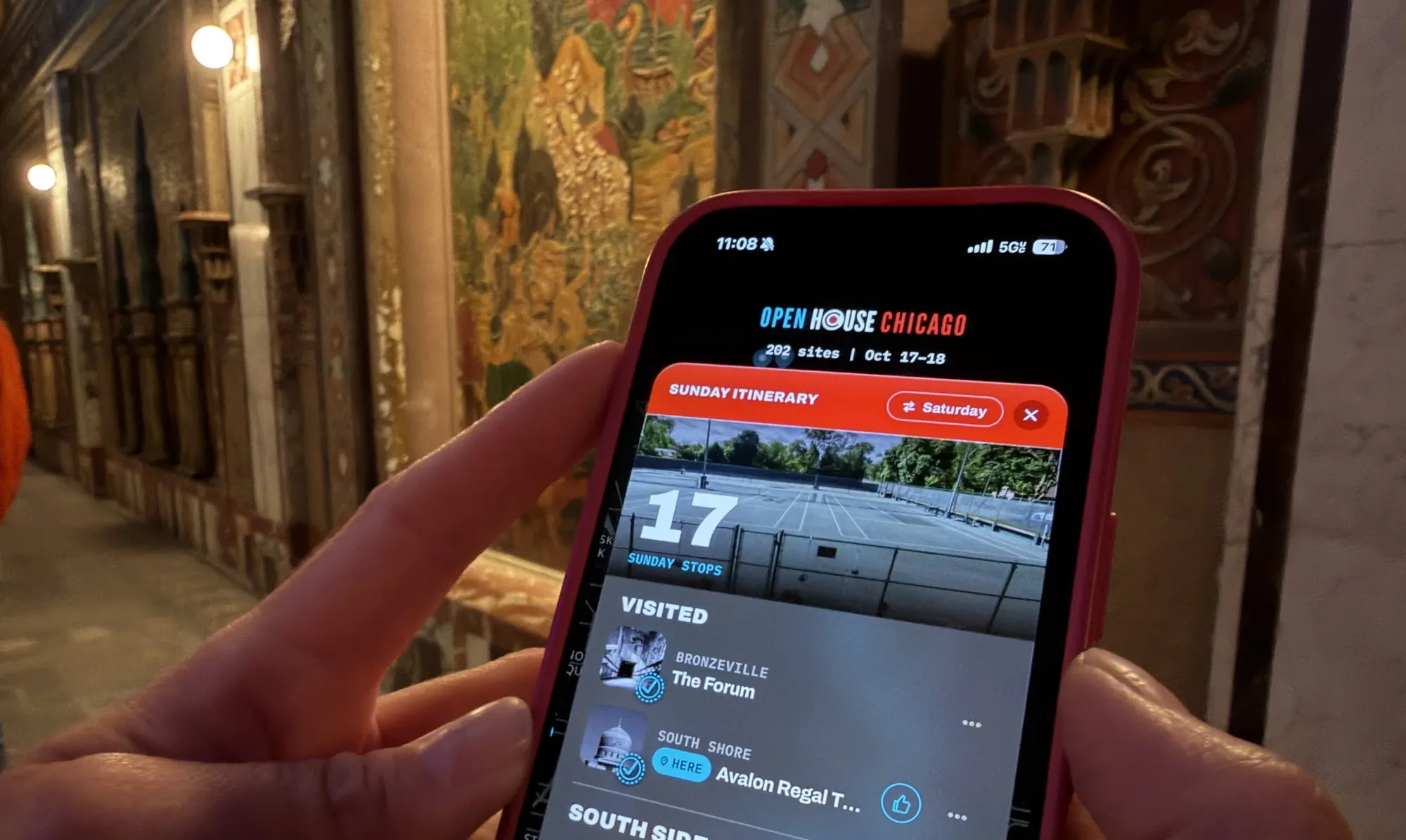
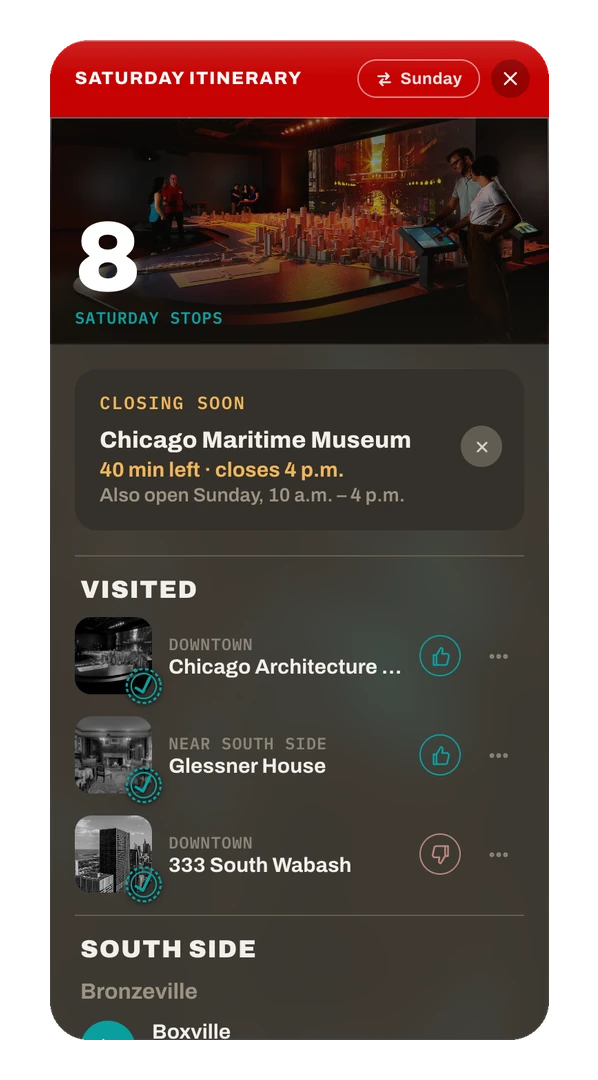
Every site lands on a day. Tap Add to Itinerary and the app asks Saturday or Sunday, or skips the question when a site is only open one of them. Change your mind and the same menu moves it to the other day or takes it off the list. Each day sorts itself by part of town, then by neighborhood, so it reads like a route instead of a pile. And as the day goes on, everything you've seen rises into a Visited block at the top, so what's left is always what's next.
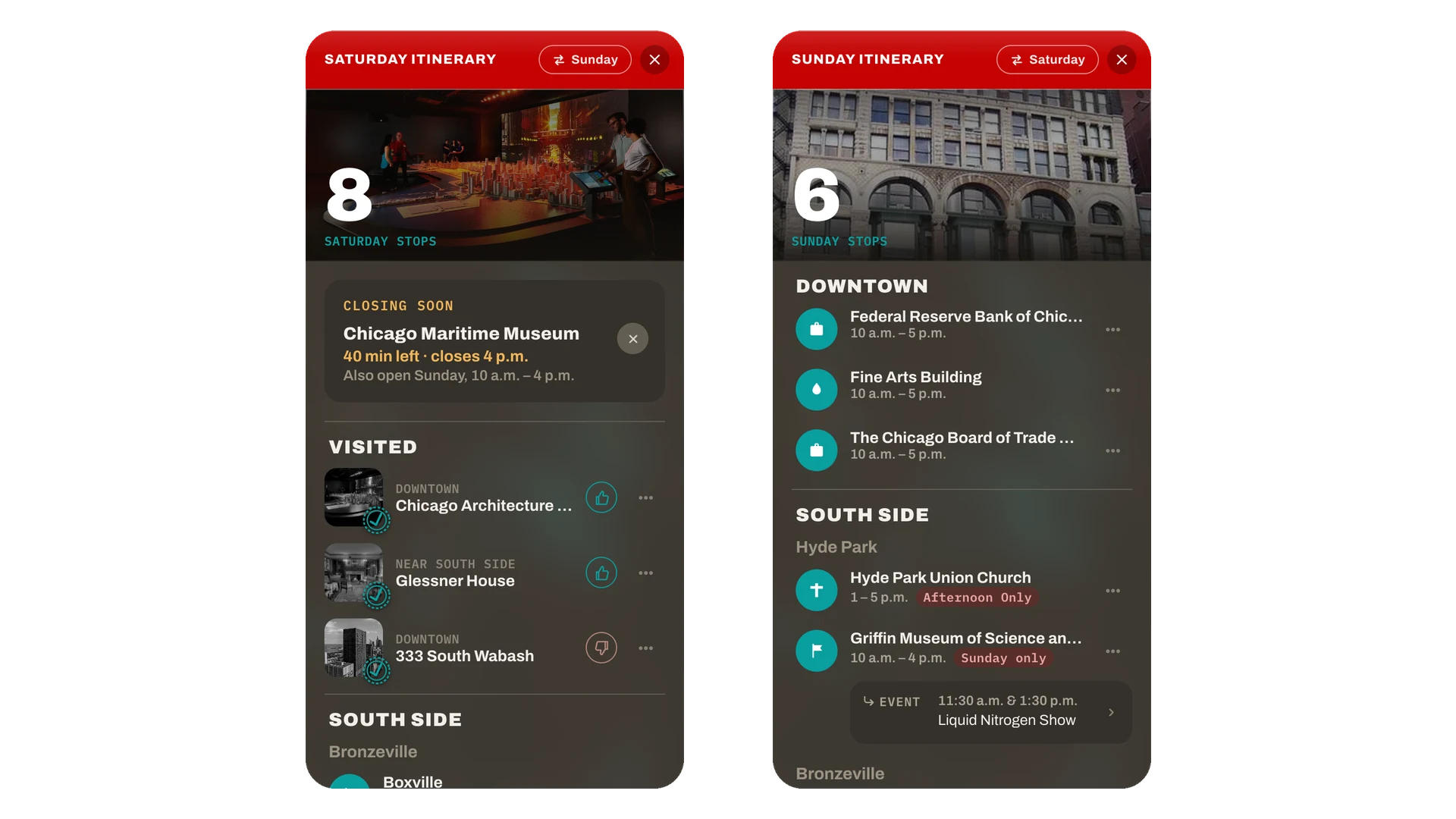
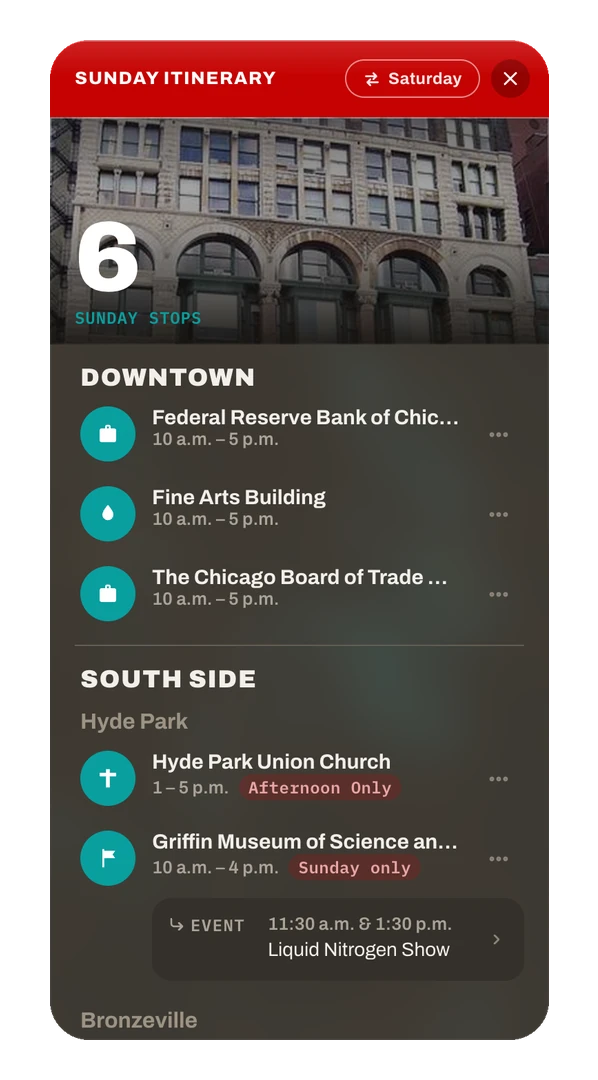
Go Mode
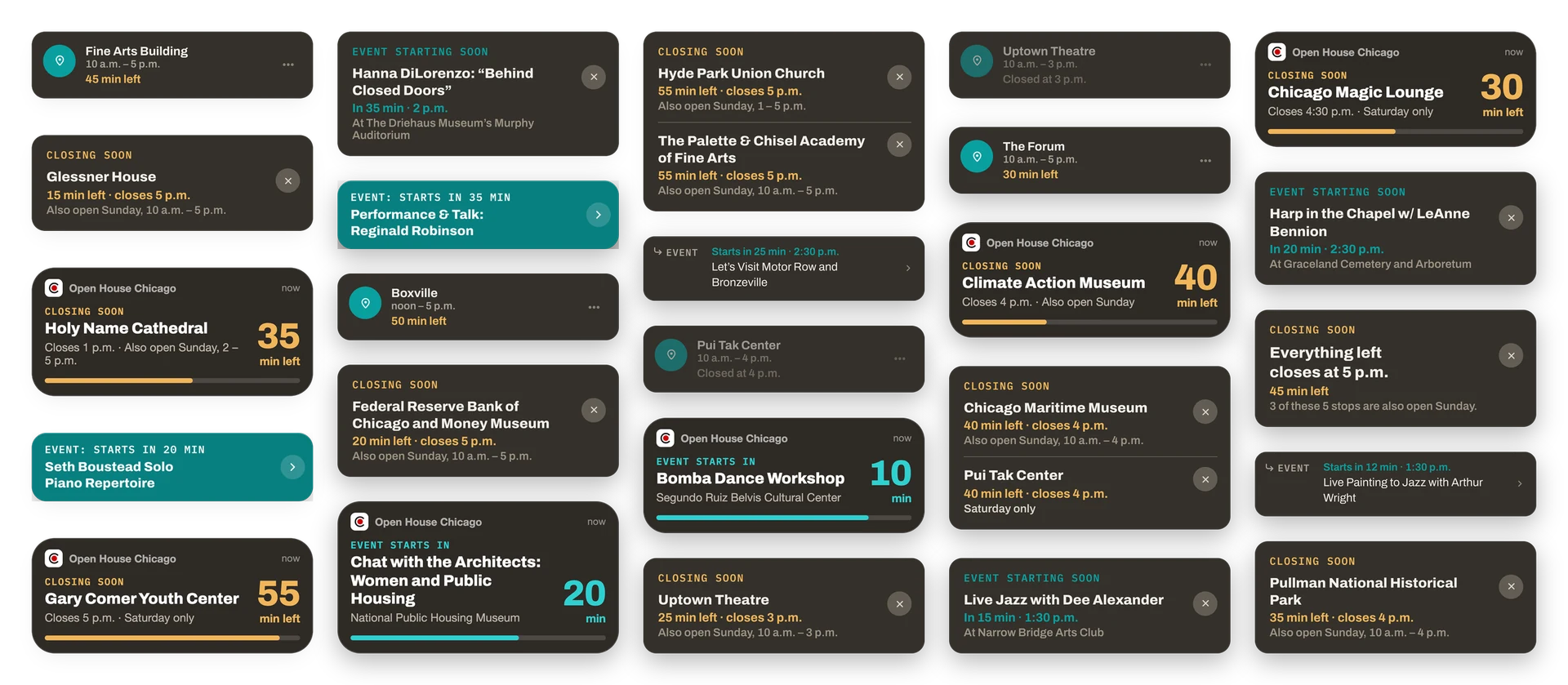
On the weekend, the app watches the clock. Stops about to close rise to the top of your day, with Sunday hours for the ones worth saving. Events count down beside them.
It watches where you are, too. Get within 100 meters of a stop and it opens on its own with a teal “You’re Here” panel.
Rate it with a thumbs up or down, and it shows what’s open nearby. No server behind it, so nothing goes down on the busiest weekend of the year.
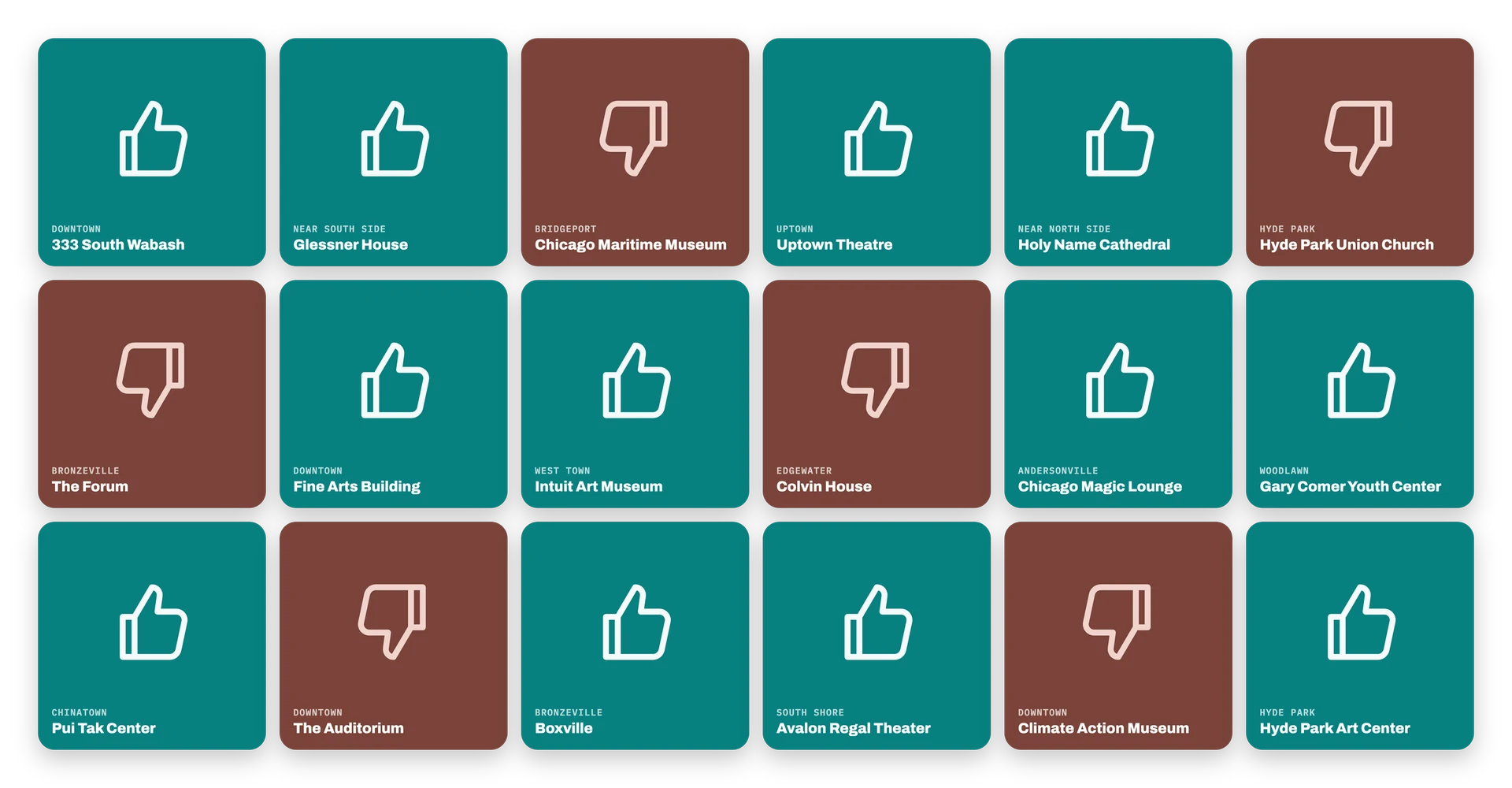
And when it’s over, check your OHC Weekend Wrapped
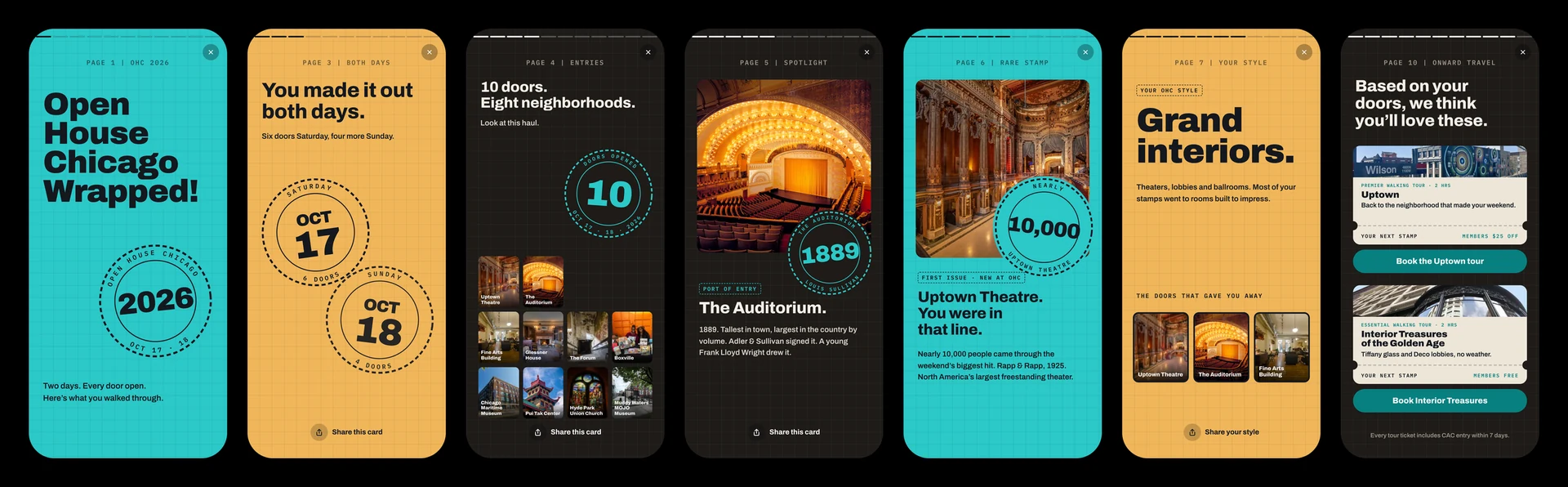
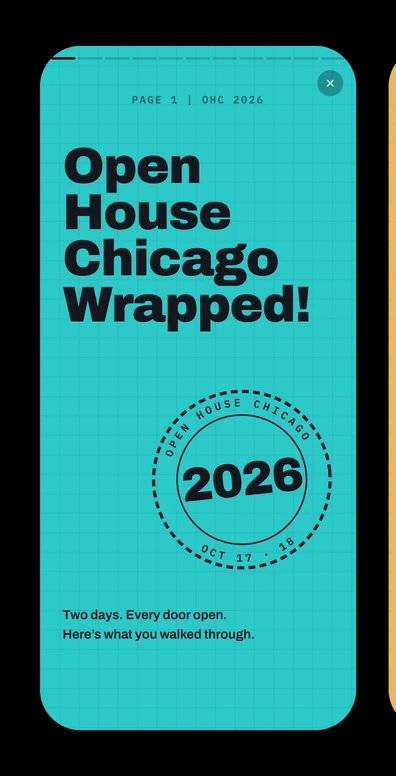
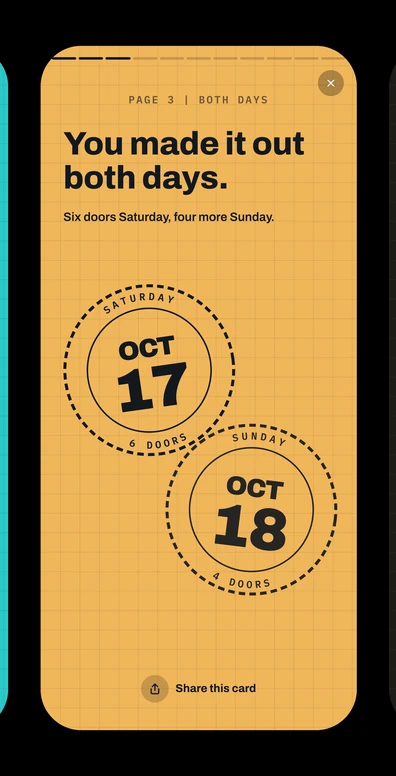
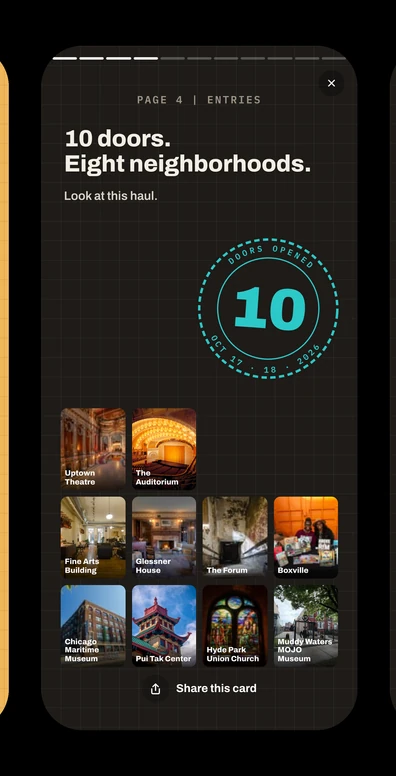
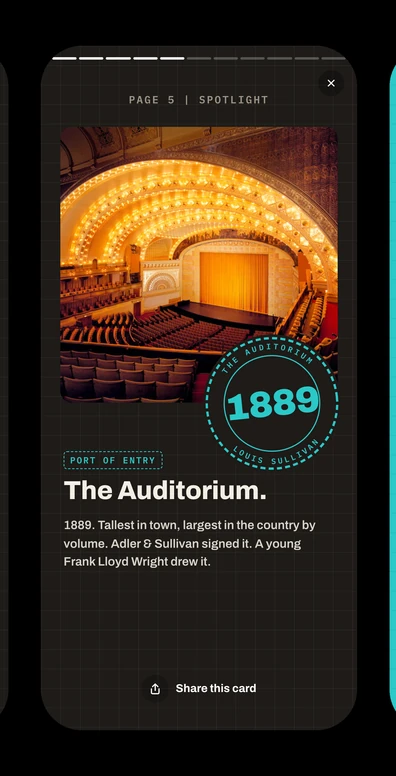
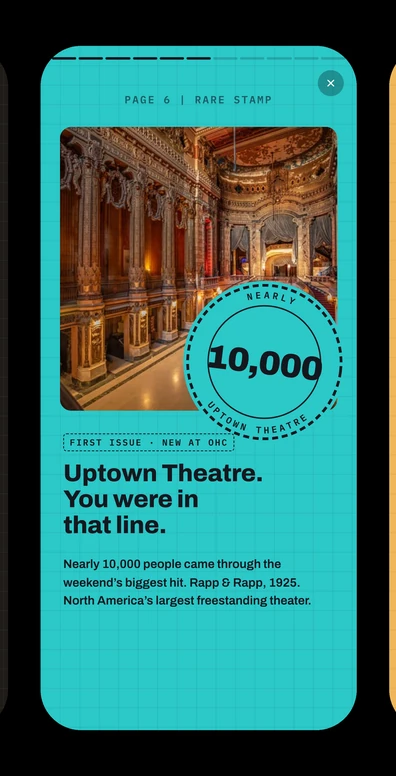
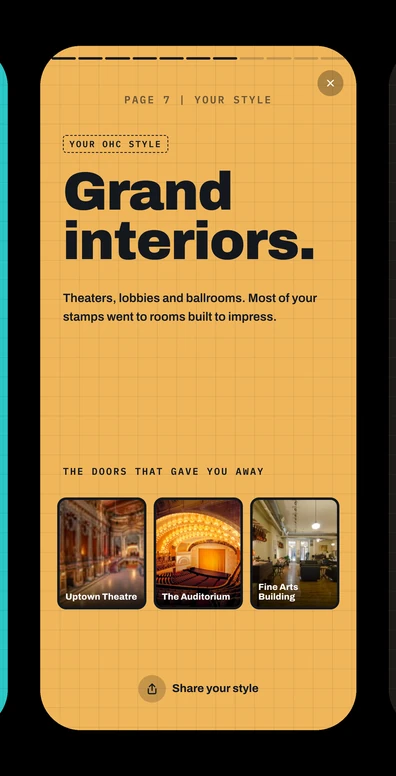
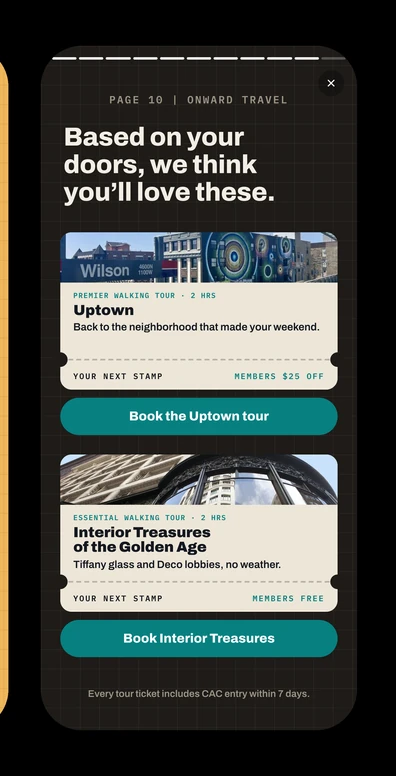
More than a weekend. A saved location history.
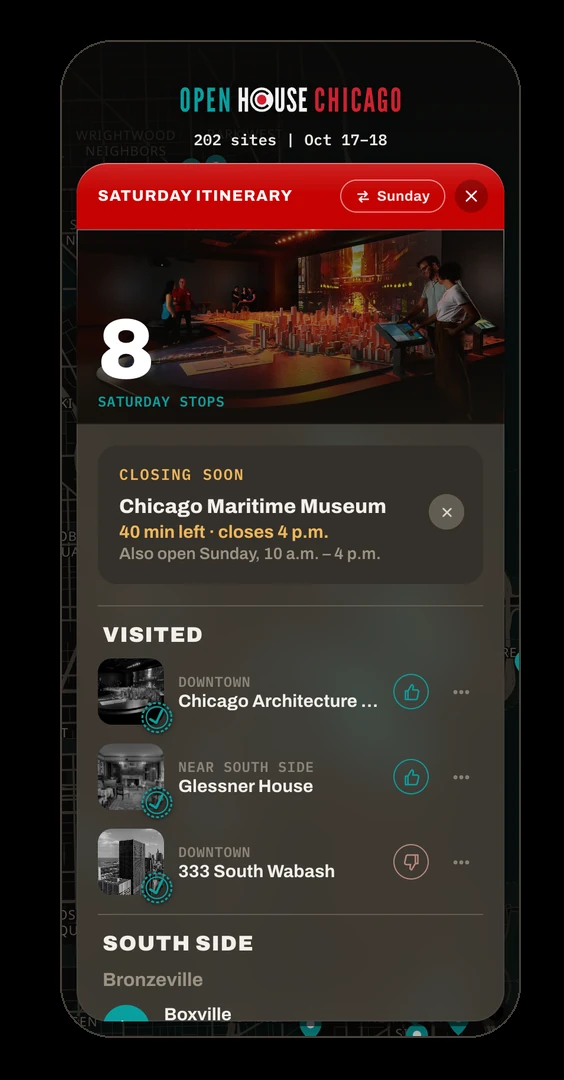
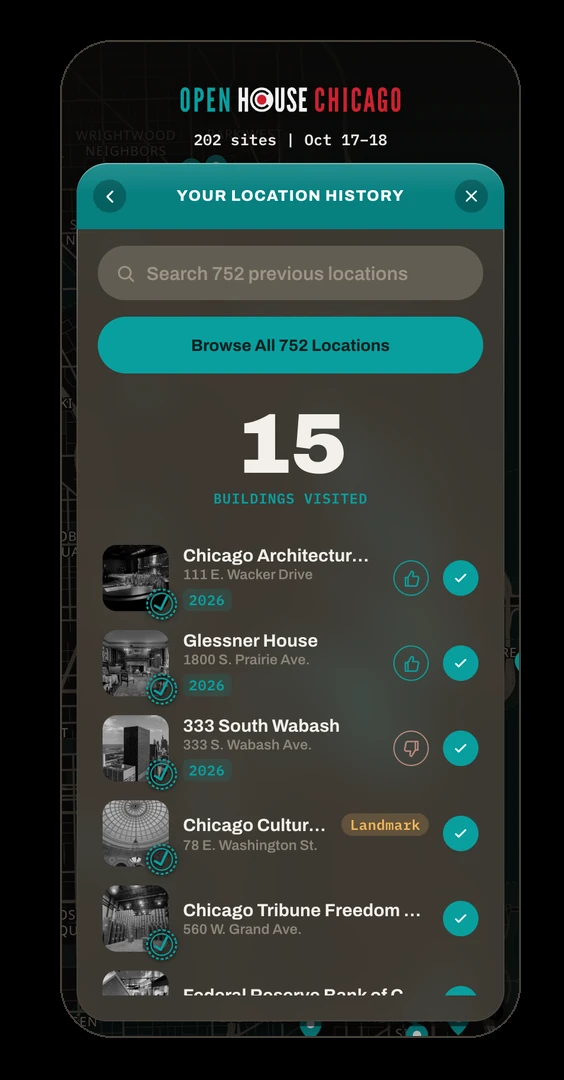
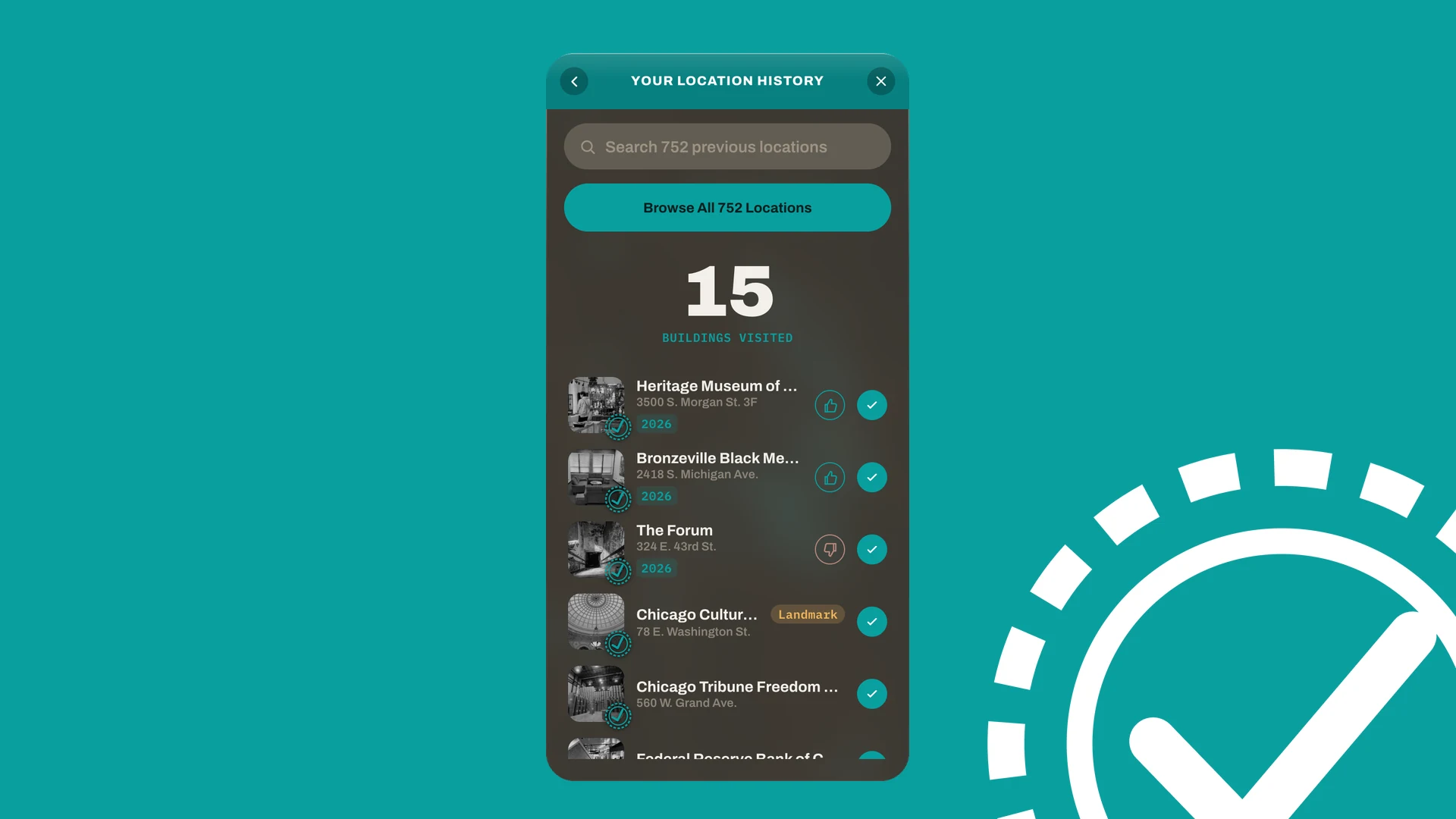
Every visit joins a personal history, matched against CAC's archive of 752 buildings back to 2014. Past years count too: search for a place you went in 2017, tap it, and it's stamped into your record. This year's visits stamp themselves the moment you mark them on site. The weekend stops resetting every year, and the app is the thing that remembers it.
Behind the Scenes
The experience was born out of conversations with previous OHC attendees. The Chicago Architecture Center also had a list of what worked in years past and…what didn’t. From there, I used AI to mine reviews of the former OHC app and created a set of recommendations to lay the foundation.
I worked with Claude to create a robust plan around features, designs & implementation. After several swings straight from Claude Design, I wound up sketching out a few screens to help organize. These pencil sketches went straight into Claude to set the direction, and the structure you see in every screen above traces back to them.
From there an AI agent wrote the code and I directed every pixel: welcome cards, micro-animations, component interactions. I worked with a series of subagents, including a strategist, creative director, copywriter & designer. The goal was to go beyond a prototype and make this real. Job complete.